
Paediatric procedures
Preparing the child and supporting the family
Explore the pathwayPreparing the child and supporting the family
Blood tests, venous access and wound dressings can cause fear, particularly when the child does not know what will happen. The care approach should consider age, understanding, previous experiences and preferences. Appropriate, truthful explanations help build a trusting relationship before the procedure.
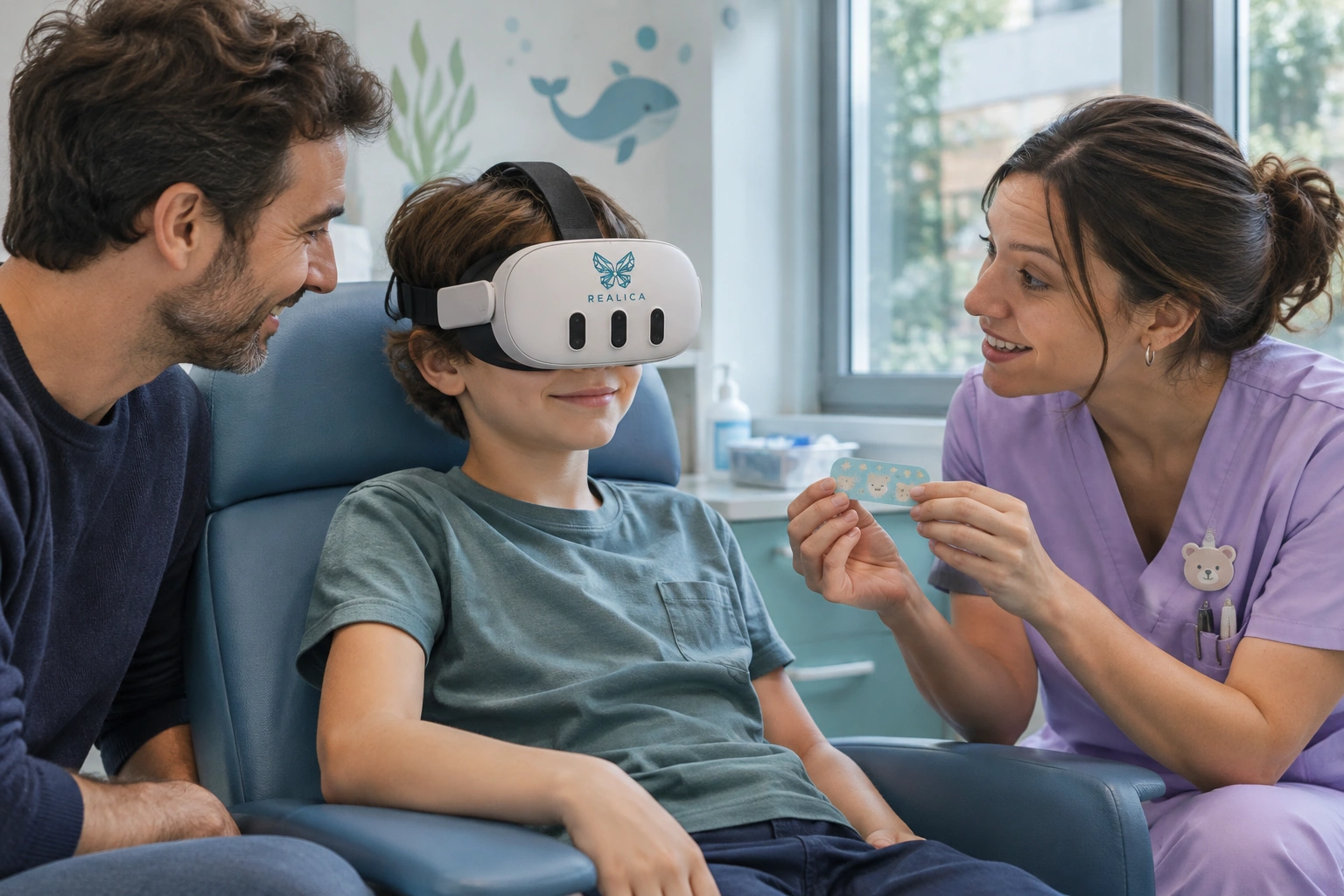
Virtual reality may be offered as a distraction tool for children and young people for whom its use is appropriate. The headset provides a different focus of attention at certain points during care. The child's willingness, tolerability and compatibility with the procedure guide the decision.

The caregiver's role
The family helps identify preferred content, ways of communicating and signs of discomfort. Where possible, familiarisation takes place before the clinical procedure, avoiding a first encounter with the headset that involves an unexpected or pressurised request.
The child must be able to express refusal or ask for a break in an understandable way. If the headset increases discomfort, the approach is modified or suspended. The team keeps other support strategies and indicated analgesic measures available.
Evidence and appropriateness
A randomised study of blood sampling observed reduced pain and anxiety with VR compared with standard care. [1] Other studies have explored feasibility during more complex procedures, such as PICC placement. [2] Technologies, content, ages and care approaches differ: the results do not establish a universal protocol.
Age limits and contraindications must be taken from the instructions for the system actually being used. The inclusion of young children in a study using another device does not automatically extend the use of REALICA to those age groups.
When specific support is needed
For autistic or neurodivergent children and young people, or those with complex communication needs, preparation requires an individual assessment in greater depth. The OASI VR area develops this pathway, focusing on the predictability of the sequence, adjustment of stimuli and family involvement.
Discover OASI VR pathways
In the same area