
Comfort and emotional wellbeing
Making room for the person's experience
Explore the pathwayMaking room for the person's experience
Waiting, repeated appointments and time on the ward can be accompanied by worry, tension and difficulty shifting attention away from illness. These experiences require listening and a care approach that is attentive to individual preferences.
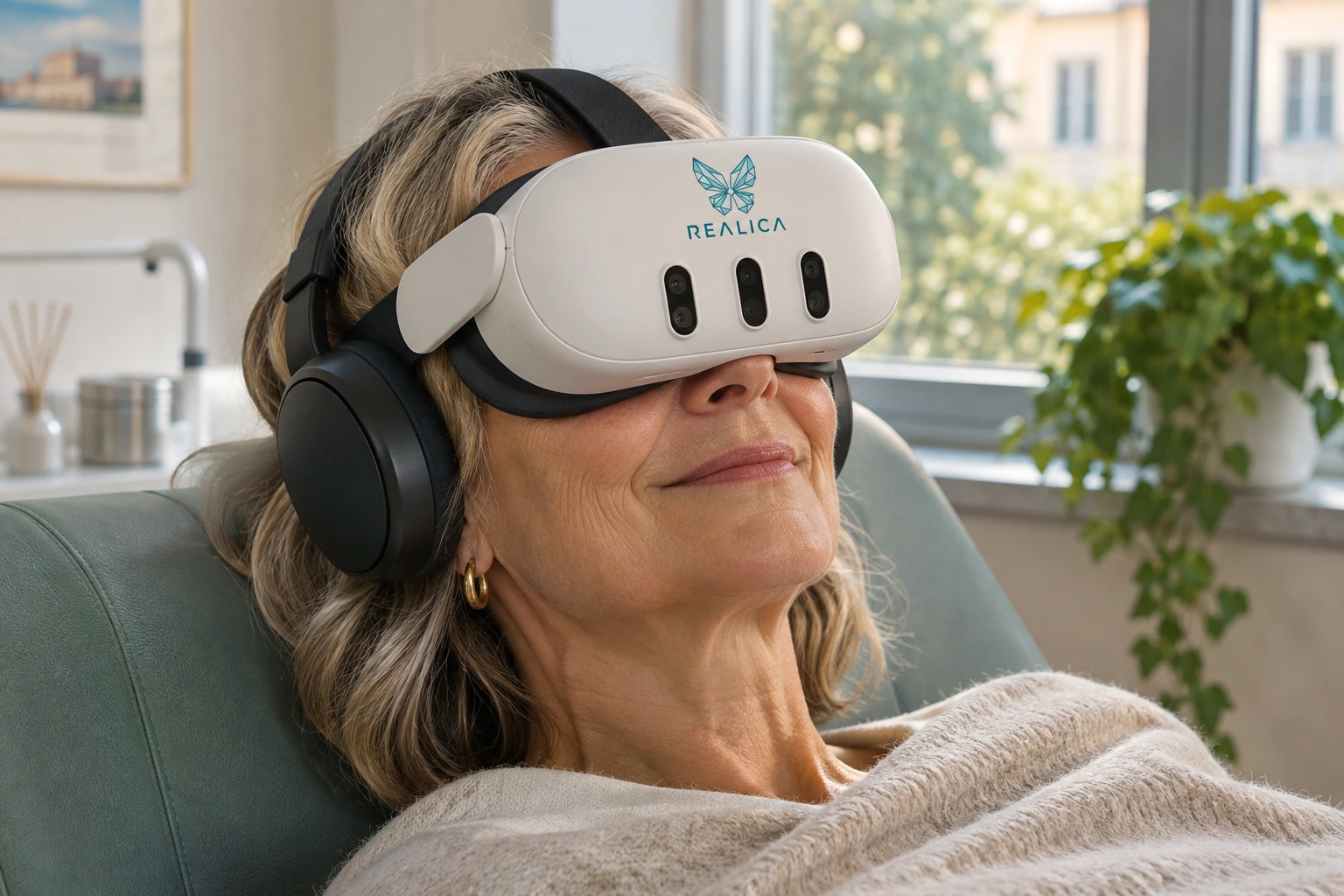
REALICA offers immersive distraction and relaxation experiences for integration at selected moments in the care pathway. Virtual environments and audio content provide a different focus of attention and can be chosen to encourage relaxation. The aim is to support comfort during the session and make time spent in the facility more responsive to the person's needs.

Personalising the approach
Staff agree with the patient on the timing, content and a duration compatible with their clinical condition. Familiarity with the headset, ability to understand the experience, fatigue and preferences guide the introduction. A brief trial provides initial feedback and allows the approach to be adapted.
The person retains the ability to choose, request a break and stop. Content, audio and position must allow communication with the team. The experience fits within care schedules and opportunities for interaction with family members and staff.
Linking comfort with the care relationship
A brief conversation before and after the session helps clarify expectations and the person's experience. The professional can ask whether the experience was enjoyable, which elements supported relaxation and whether there is interest in repeating it.
Immersive support complements care and, when indicated, psychological support. Persistent emotional distress requires professional assessment and appropriate care.
Assessing usefulness within the pathway
Tolerability, enjoyment, reported tension and the desire to repeat the experience provide useful information. Oncology research findings support interest in immersive distraction during selected treatments, although limitations arise from differences in populations and methods of use. [9]
Continuation is agreed based on individual feedback, care goals and conditions at subsequent sessions.
Explore support for wellbeing during care
In the same area