
Oncology and infusion therapies
Supporting comfort during treatments
Explore the pathwaySupporting comfort during treatments
The cancer care pathway may involve repeated sessions, waiting times and prolonged periods on the ward. The emotional experience varies between people and during the course of the same therapy. A supportive approach must respect the need for information, the ability to communicate symptoms and the desire to maintain contact with those providing care.
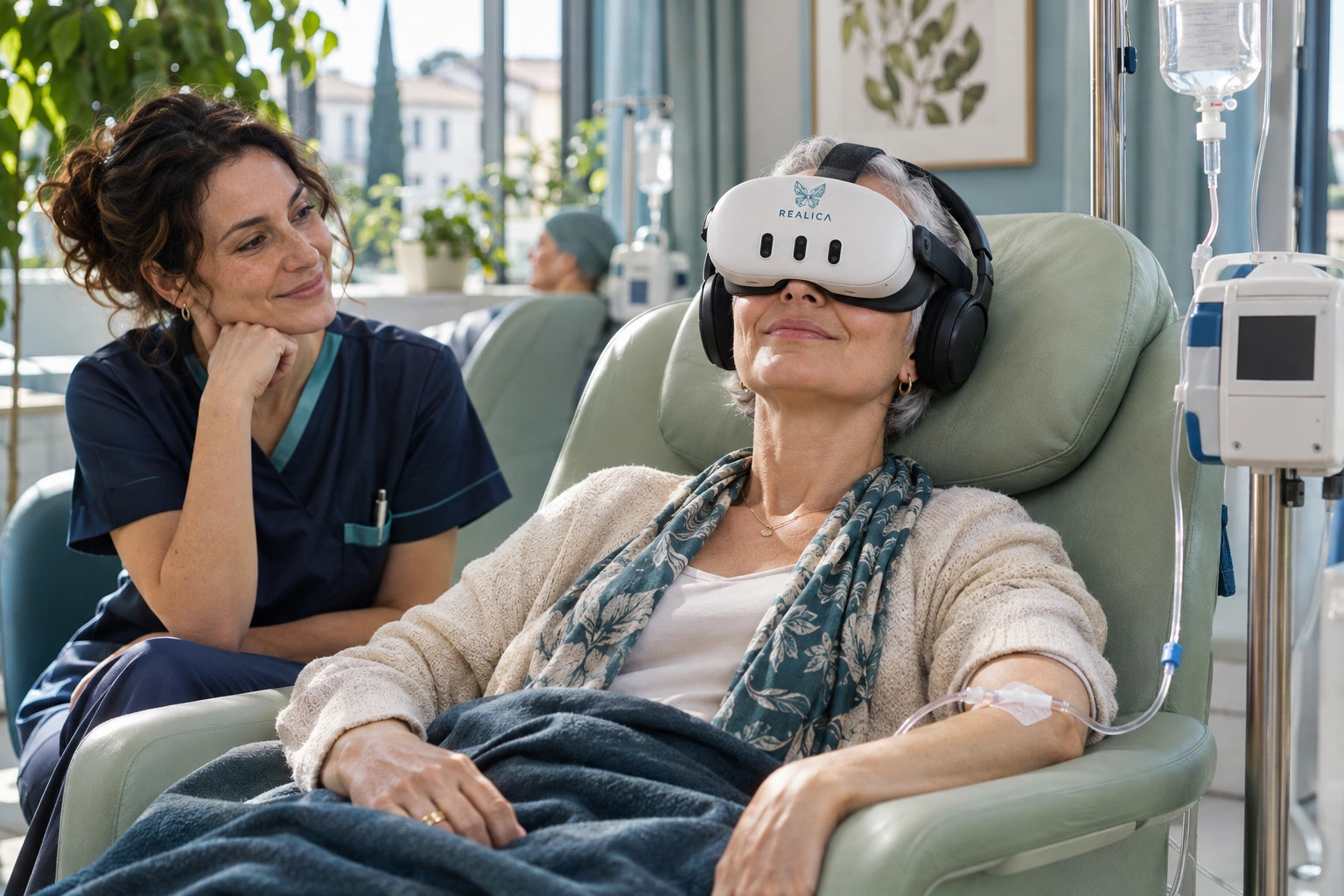
REALICA may be assessed as a complementary distraction and relaxation intervention during selected moments of a session. Immersion offers a setting different from the clinical environment, without changing the cancer treatment or planned monitoring.

Selecting the right moment
The approach is agreed with the person and the team. The practitioner considers current symptoms, fatigue, position, headset comfort and the need for interaction. Immersion need not be maintained throughout the infusion: short intervals and breaks may be more compatible with the patient's experience.
Content selection must take preferences into account. An environment perceived as pleasant by one person may not appeal to another. Refusal or a request to stop is accepted as guidance for adapting care.
Maintaining communication and clinical observation
The patient must be able to report new symptoms or changes in their condition promptly. The headset and audio must not obstruct contact with staff. The onset of feeling unwell requires clinical assessment; it should not automatically be attributed to VR or the treatment without investigation.
Evidence and goals
Chirico and colleagues studied VR, music therapy and standard care in patients with breast cancer during chemotherapy, finding favourable signals for anxiety and emotional state. [9] The results support interest in these interventions, but do not demonstrate effects on cancer treatment response or survival.
Within the service, relevant outcomes include tolerability, enjoyment, reported anxiety and perceived usefulness. Reduced distress during a session is not equivalent to a lasting clinical effect: benefit should be assessed over time and in the individual context.
Request a presentation for your department
In the same area