
Preparing for magnetic resonance imaging
Familiarisation before the examination
Explore the pathwayProject in development · Pathways defined by the professionalFamiliarisation before the examination
Magnetic resonance imaging requires remaining in a defined position and controlling movement. The environment, sounds and departure from familiar routines can be difficult to understand. For a child or young person with specific sensory sensitivities, preparation should start with their characteristics and the examination actually scheduled.
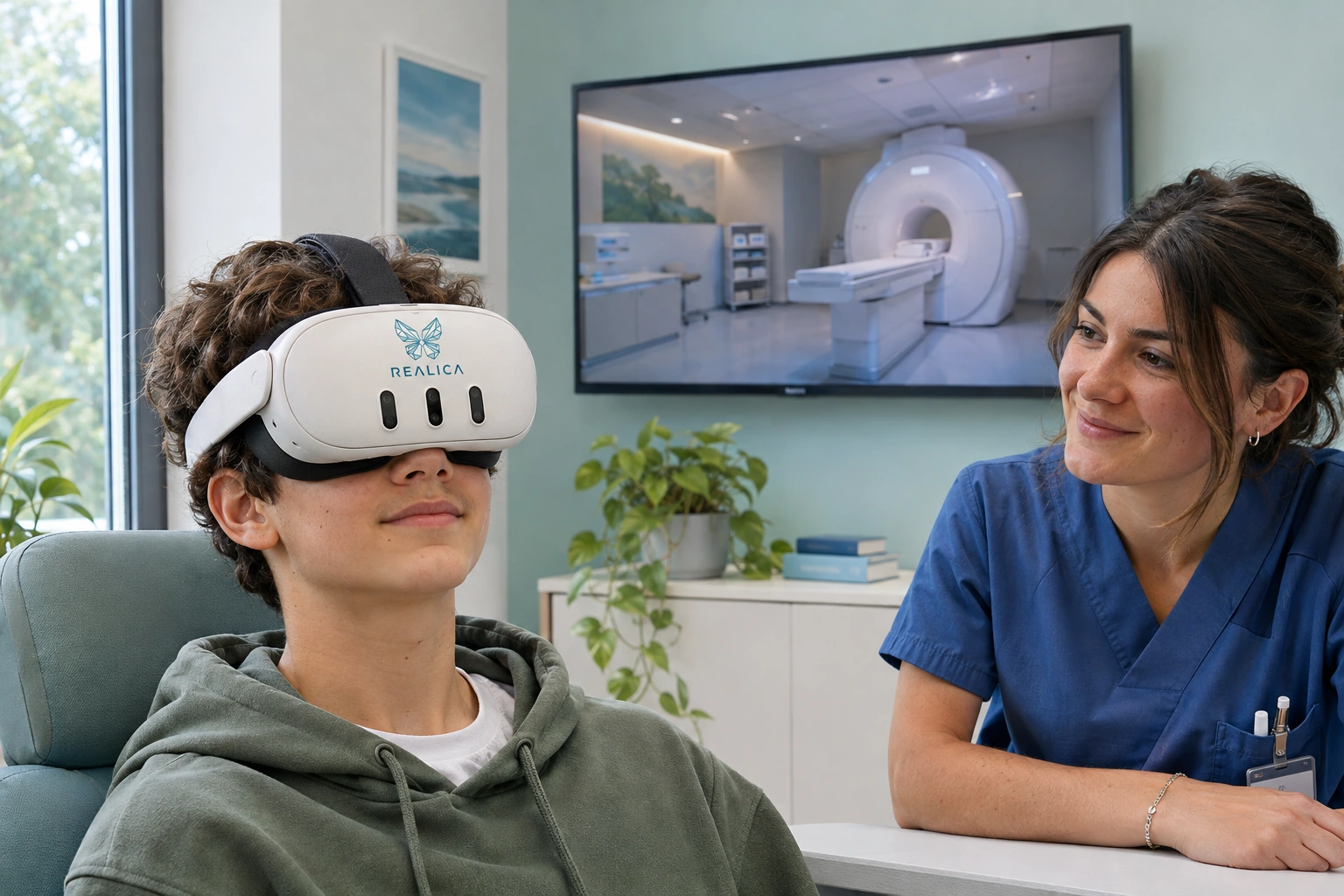
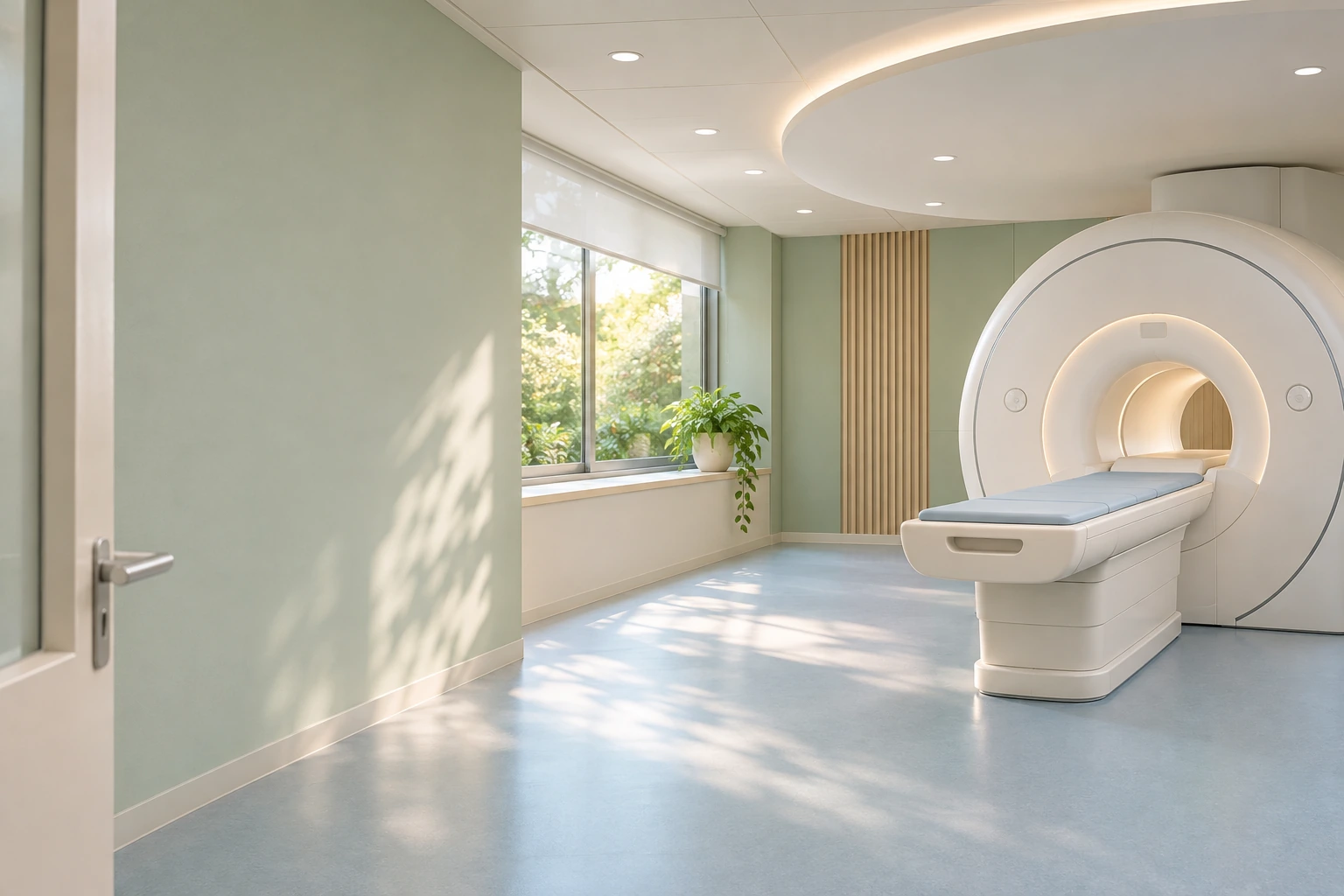
OASI VR considers a familiarisation pathway that gradually introduces the elements of the experience: entering the environment, the examination table, positioning and the request to remain still. The simulation can help explain what will be required and provide practice with short sequences, with duration and intensity set by the professional.
Progression adapted to the person
The pathway begins with understanding the headset and willingness to use it. Stimuli are introduced progressively and may be reduced or suspended. Practice in remaining still is not the same performance task for everyone: the team assesses tolerance, understanding and the possibility of transferring what has been experienced to the real situation.
The family helps identify signs of discomfort, reassuring strategies and effective ways of communicating. A visual sequence can support the link between preparation and the appointment, including a clearly recognisable ending.
Virtual preparation and the diagnostic examination
The VR described concerns the preparatory stage, carried out outside the MRI environment. It does not imply that an ordinary headset can be taken into the magnet room or used during image acquisition. Access conditions and device compatibility follow the radiology service's procedures.
The aim of effective preparation is to support better tolerability and assess whether the examination can be undertaken under the required conditions. Any use of sedation or anaesthesia remains a clinical decision. Its elimination cannot be promised.
What the research says
A randomised study of preparation for a simulated MRI found comparable results between VR and other preparation methods, without demonstrating an advantage in successful completion of the simulation. The authors call for validation during actual examinations. [4]
Explore the preparation pathway
In the same area