
Personalised pathways and the family's role
Assessment starts with the person
Explore the pathwayProject in development · Pathways defined by the professionalAssessment starts with the person
Autism, ADHD and intellectual disability encompass different profiles. Support needs cannot be inferred solely from a diagnostic label. Before offering VR, the professional considers ways of communicating, understanding of requests, interests, sensory sensitivities and the ability to express discomfort.
Willingness to wear the headset is one element of the assessment. Introduction may require several steps: observing the device, exploring it, trying it briefly and assessing the experience. Not everyone finds immersion comfortable; other methods of preparation must remain accessible.

Defining a concrete goal
The pathway is organised around a recognisable need: understanding a consultation, becoming familiar with a sequence, tolerating a brief wait or communicating the need for a break. Focused goals make it possible to choose content and observe whether the approach is useful in the real-life situation.
The duration, complexity and intensity of stimuli are adapted to the person. In the OASI VR project, the professional portal is designed to support activity selection and pathway review; the functions presented form part of the system's development.
The family's contribution
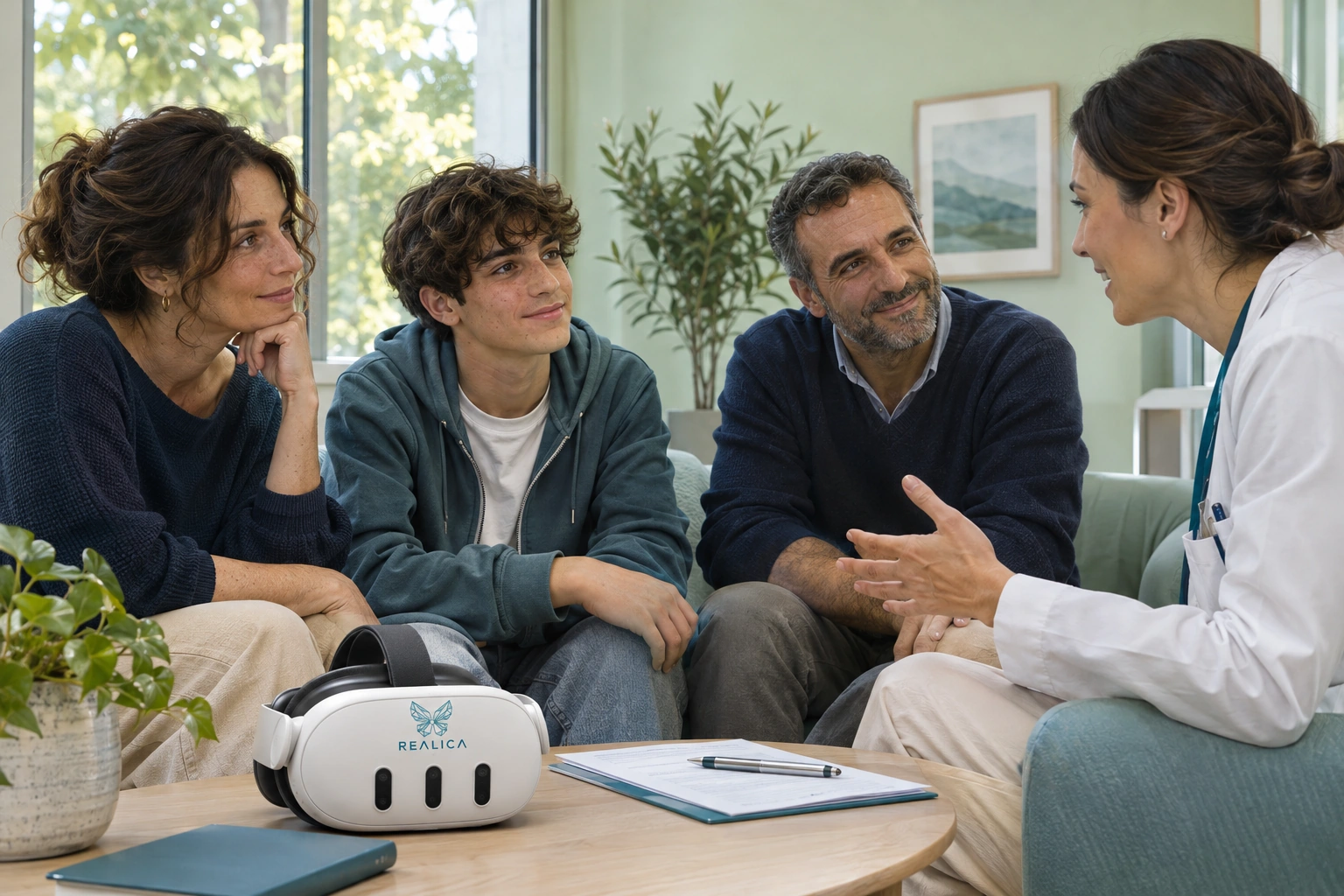
The family knows the person's preferences, habits and reassurance strategies. Discussion with the team enables this information to be shared and communication to remain consistent between preparation and the appointment.
Any use at home requires professional guidance and the presence of an adult. Preparation must not become a burdensome activity or an additional source of pressure. The caregiver's observations contribute to the assessment without transferring clinical responsibilities to the family.
Observing beyond the headset
Engagement during a virtual experience does not, on its own, demonstrate a benefit in everyday life. For preparation for healthcare, it is necessary to observe what happens during the consultation or procedure: understanding, signs of discomfort, requests for support and opportunities for participation. The professional integrates this information and modifies the pathway when necessary.
Information for families and professionals
In the same area