
Psychoeducational support and everyday living skills
Preparing for situations and developing useful independent living skills
Explore the pathwayProject in development · Pathways defined by the professionalPreparing for situations and developing useful independent living skills
Understanding a new situation, communicating a need or carrying out a domestic activity may require specific support for some autistic children and young people. The psychoeducational pathway starts with the person's abilities, interests and needs, identifying skills that are useful in their everyday life.
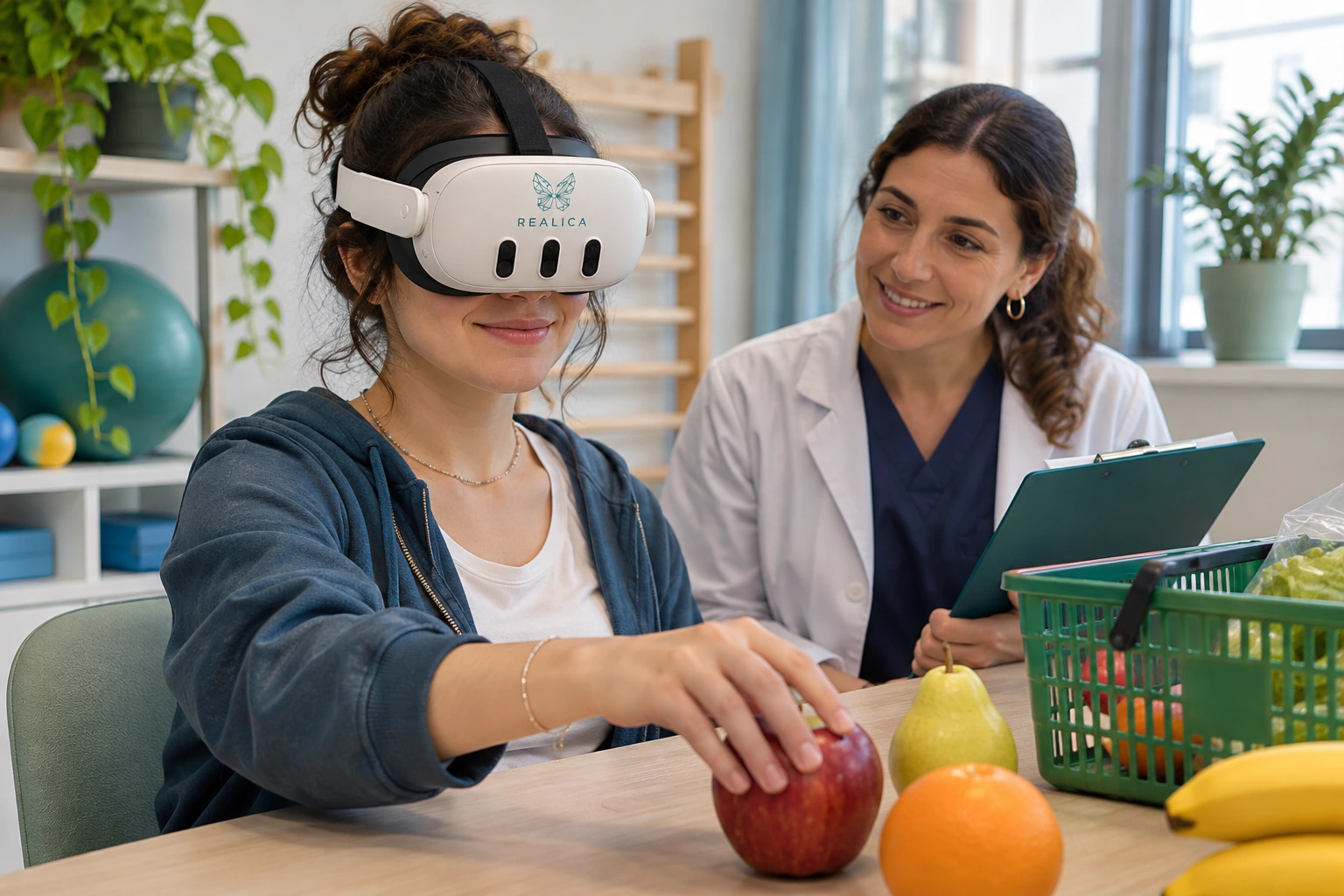
OASI VR envisages the development of immersive experiences to complement educational and habilitation activities defined by professionals. The simulation is designed as a space in which to observe, recognise and practise situations and sequences, with graded assistance and opportunities for repetition. Goals are agreed with the child or young person, according to their way of participating, and with the family.

Familiarisation and gradual exposure to settings
The project considers recognisable environments such as a classroom, shop, public transport or recreational space. The pathway may initially present a few elements and progressively introduce people, sounds, waiting or changes in sequence, according to the sensory profile and tolerability.
Introduction must respect signs of discomfort, the ability to ask for help and willingness to continue. Preparation of the child is accompanied by adaptations to the real environment: reducing avoidable stimuli and making requests understandable remain part of the pathway. When the need concerns a phobia or significant anxiety, exposure requires appropriate clinical assessment and guidance. [15]
Social skills and functional communication
Activities within the project may involve asking for an object or information, expressing a preference, waiting briefly for a turn, requesting a break and communicating refusal. The aim is to support understandable, meaningful exchanges in the settings the person attends.
Words, images, symbols and other communication tools are chosen in line with the approach already in use. Participation can take different forms: activities value communication of one's needs and reciprocity, while respecting individual style.
Domestic skills and practical activities
Examples under development include recognising the objects needed for a routine, ordering the steps of personal hygiene, packing a school bag, setting the table or tidying a space. For young people, further activities may involve a simple shopping list or organising materials for a task.
The professional breaks the activity down into understandable steps, chooses support and adjusts its intensity according to performance. The simulation prepares recognition of objects, rules and sequences; motor components and the practical use of tools require practice in the real setting, with appropriate assistance.
Learning activities linked to individual goals
The pathway may include demonstrations, short visual stories, choosing the next step and guided practice. Complexity, language and duration are adapted to the level of understanding and interests. School, family and professionals share recognisable goals, such as preparing materials for an activity or asking for an explanation when an instruction is unclear.
Supporting the family and transferring skills to everyday life
Parents and caregivers help choose priority situations and identify facilitators and difficulties. The professional agrees how to revisit a sequence at home, what assistance to use and what observations to collect. Family involvement requires sustainable practical guidance and discussion of the family's own support needs. [14]
The transition to real life proceeds through supported practice in familiar environments, followed by appropriate variations in materials, people or situations. Assessment concerns what the child can do in their own setting: initiative, communication, assistance required and wellbeing during the activity. Completion in the simulation provides information distinct from everyday independence.
A project guided by professionals
The guidelines include support for adaptive skills and communication, with the involvement of family members and educators. [14] The OASI VR activities described constitute an area of development to be assessed for usability, tolerability and specific educational usefulness. Available content and methods of use will be defined for each application within the individual plan.
Explore OASI VR psychoeducational pathways
In the same area