
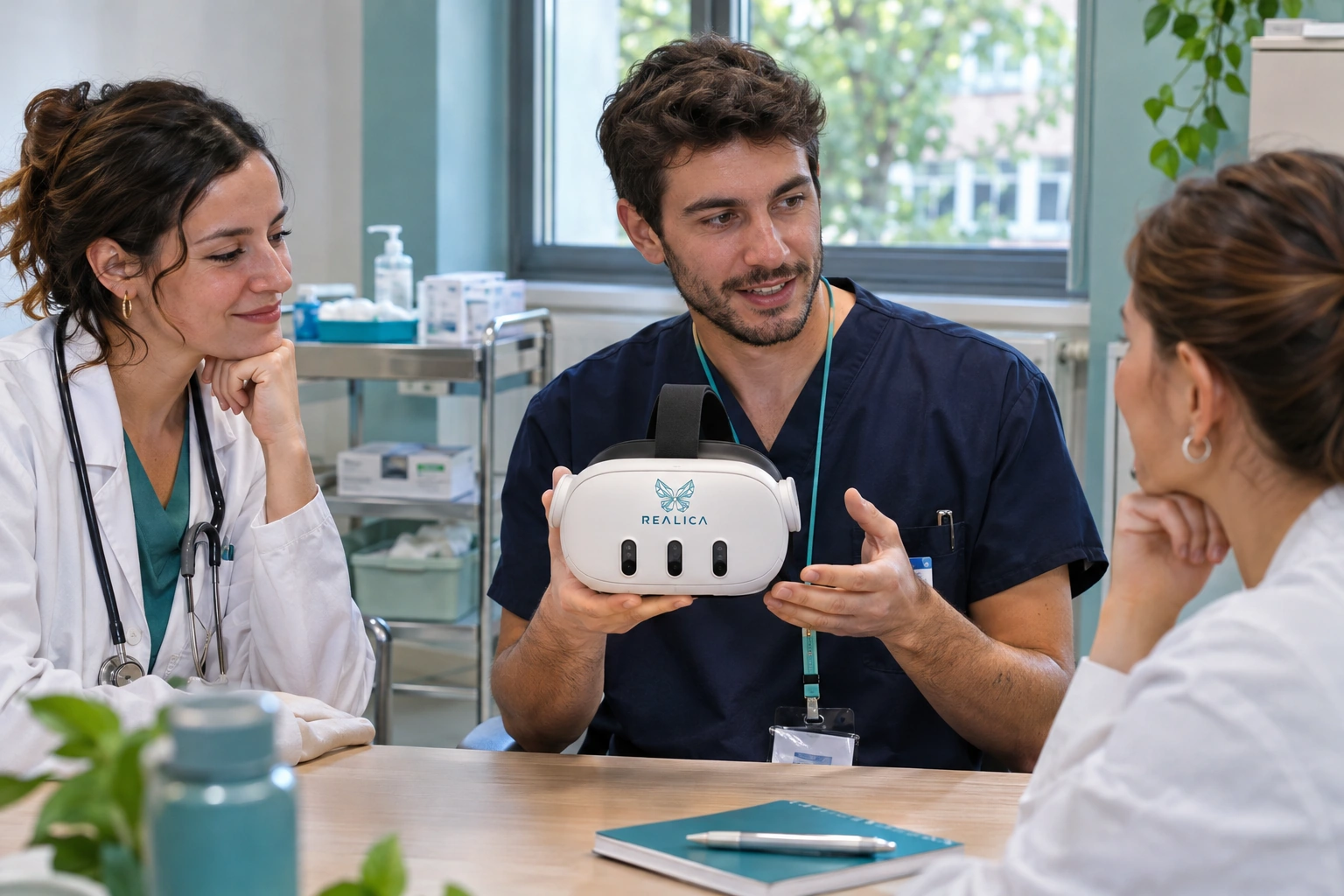
Clinical experience and introduction into care settings
From device availability to the care pathway
Explore the pathwayFrom device availability to the care pathway
Introducing VR requires a defined setting for its use. Before offering it routinely, the department or practice identifies the procedures of interest, patient selection criteria and designated staff. Training covers introducing the experience, positioning, communication, stopping the session and hygiene management in accordance with the applicable instructions.
An initial assessment can focus on a limited set of procedures. This makes it possible to observe tolerability and compatibility with the team's work, avoiding attribution of organisational benefits to the device that have not been measured.

What to document
A clinical experience record should describe the setting, population and procedure, specifying when VR was offered and for how long. Results may include acceptance, pain and anxiety assessed with appropriate tools, interruptions, treatment completion and staff observations.
Medication requirements, care time and other organisational outcomes require appropriate definitions and comparisons. Testimonials help to understand people's experiences, but their role remains distinct from that of clinical studies.
An identifiable scientific reference
The reference from the Oasi Research Institute–IRCCS in Troina is described on the dentistry page. [3]
Proposing an experience within your service
A discussion with REALICA can start with the service's needs and patient profile. The aim is to assess sustainable integration, defining methods of use and observations that will be useful to the team. Any research projects require a protocol and the assessments applicable to the study setting.
Propose a project in your department
In the same area