
Missione Cerotto Stellare
A guided pathway to learn about blood sampling
Explore the pathwayProject in development · Pathways defined by the professionalA guided pathway to learn about blood sampling
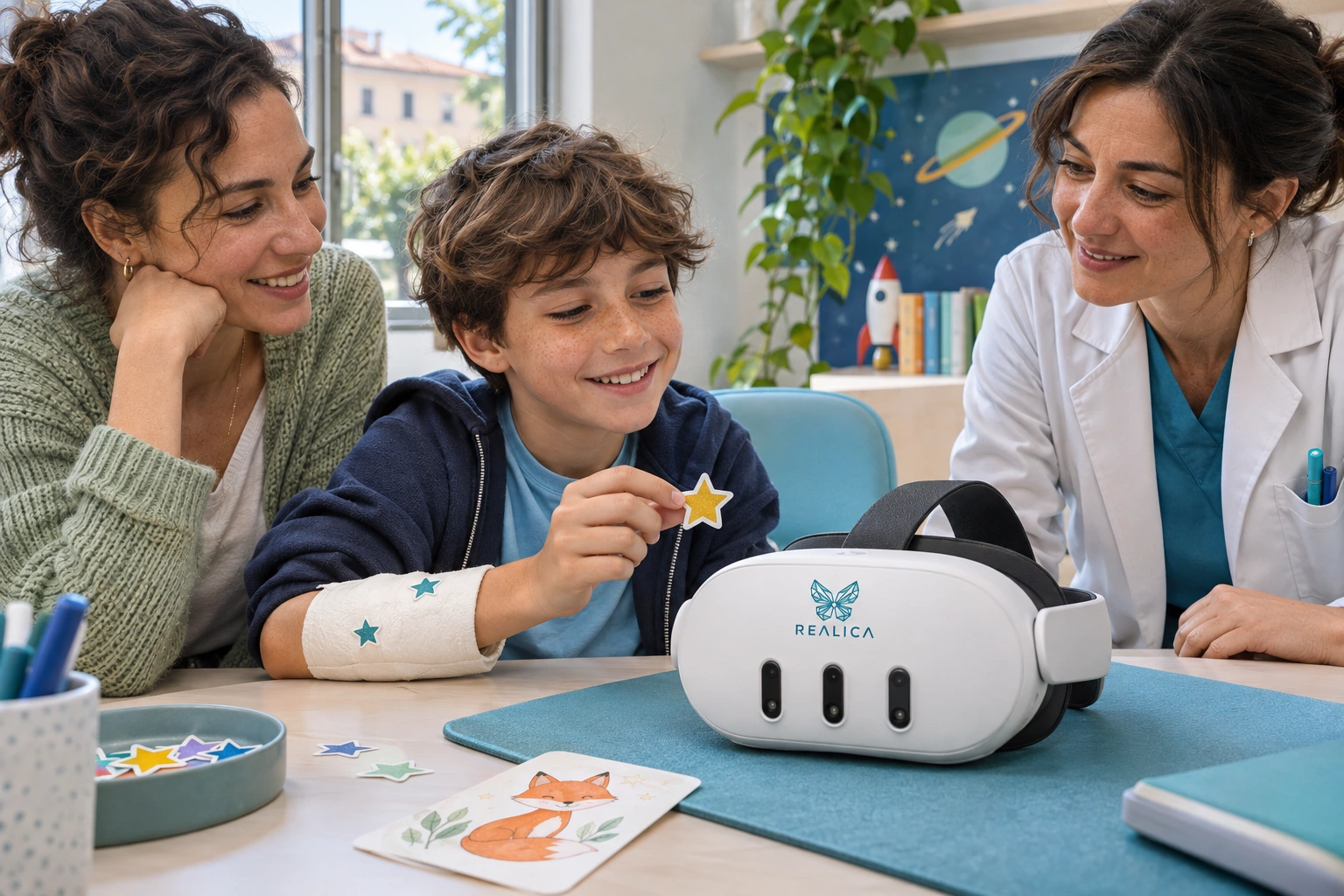
Missione Cerotto Stellare is an OASI VR project experience dedicated to preparation for blood sampling. A simple narrative guides the child through recognisable stages, with a guiding character and a clear ending. The story offers a familiar context for introducing actions that may be new in the real-life situation.
The experience is adapted to the person's understanding, interests and way of communicating. The professional and family agree on the words to use, the support required and the connection with the planned procedure.

Getting to know the steps
The sequence may present arrival, arm positioning, application of the tourniquet, cleaning of the skin, blood sampling and the final plaster. A demonstration helps explain what the practitioner will do and what cooperation may be requested. The order of the steps is aligned with the facility's practice.
Sensations are described truthfully and clearly. The narrative avoids promises of no pain and does not make the child responsible for the success of the procedure.
Small practice steps and opportunities for a break
When appropriate, the child can become familiar with resting their arm, waiting briefly and asking for a break. The pace is individual. An agreed gesture, word or symbol makes the need to stop recognisable.
Feedback values participation and communication of one's needs. An interruption does not undo the progress made. Any relaxation content is offered only if welcomed, without imposing breathing exercises or performance goals.
Linking the mission to the appointment
The pathway can be revisited before the appointment using familiar points of reference. During the actual blood sampling, staff decide whether and how to use immersive distraction. The final plaster provides an understandable signal that the sequence has ended.
Missione Cerotto Stellare is a project in development. Its assessment must consider usability, tolerability and specific clinical usefulness; the experience does not guarantee completion of blood sampling.
Request information about Cerotto Stellare
In the same area