
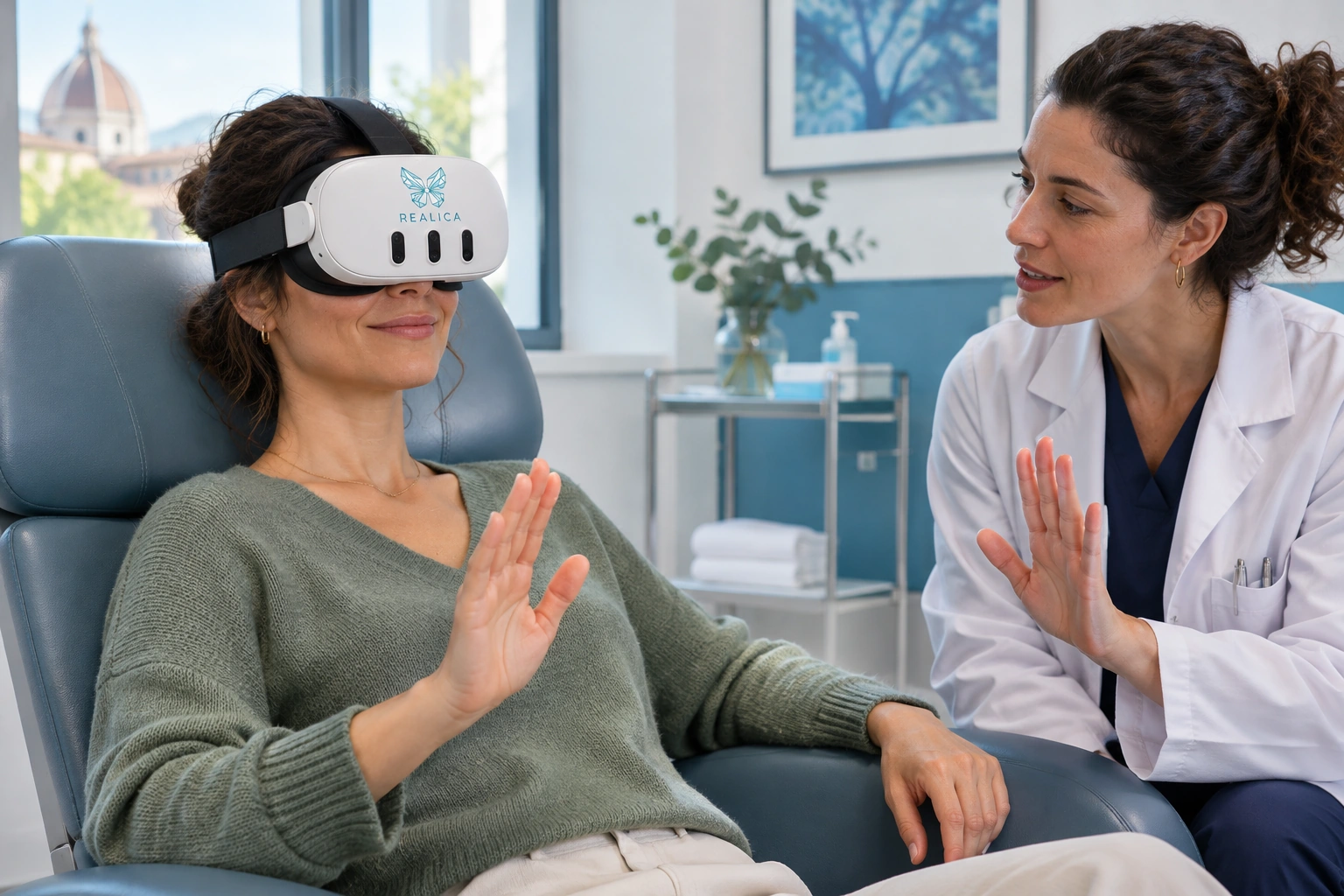
How digital sedation works
Attention and the emotional component of the procedural experience
Explore the pathwayAttention and the emotional component of the procedural experience
Immersive distraction offers visual and auditory stimuli that engage the person during the procedure. The aim is to direct attention towards an experience other than the clinical one. Studies on procedural pain support interest in this approach, with results to be interpreted in their respective contexts. [1]
REALICA uses virtual environments and relaxation content to support the patient. The person remains within the care pathway, able to listen to staff instructions and report discomfort. The experience must be compatible with the communication required by the procedure.
Before, during and after the session

01Before the session+
Before starting, the practitioner explains the purpose of the headset, checks the patient's interest and agrees a simple way to request a break. Familiarisation provides an opportunity to observe comfort, orientation and willingness to continue.
02During the procedure+
During the procedure, content and volume are managed according to care requirements. Staff check that the headset does not obstruct access to the patient, clinical observation or positioning. If nausea, dizziness, eye strain, disorientation or increased discomfort occur, the experience is stopped and reassessed.
03At the end of the experience+
At the end, the patient is guided gradually towards the conclusion of the session. Their feedback can be collected alongside the team's observations, distinguishing enjoyment from the pain actually reported and the ability to complete the procedure.
Measurable clinical objectives
Outcomes of interest include anxiety, perceived pain, tolerability, interruptions and satisfaction. Any changes in medication requirements need a dedicated assessment: they are not an automatic result of using the headset. VR retains a complementary role alongside clinical treatment.
Explore the scientific evidence
In the same area