
Blood tests, outpatient consultations and medical procedures
Understanding the sequence and communicating a need
Explore the pathwayProject in development · Pathways defined by the professionalUnderstanding the sequence and communicating a need
A brief healthcare intervention may be experienced as unpredictable or invasive. People with complex communication needs may express discomfort through behaviour, movement or refusal. Preparation should make what will happen understandable and provide accessible ways to ask for help.
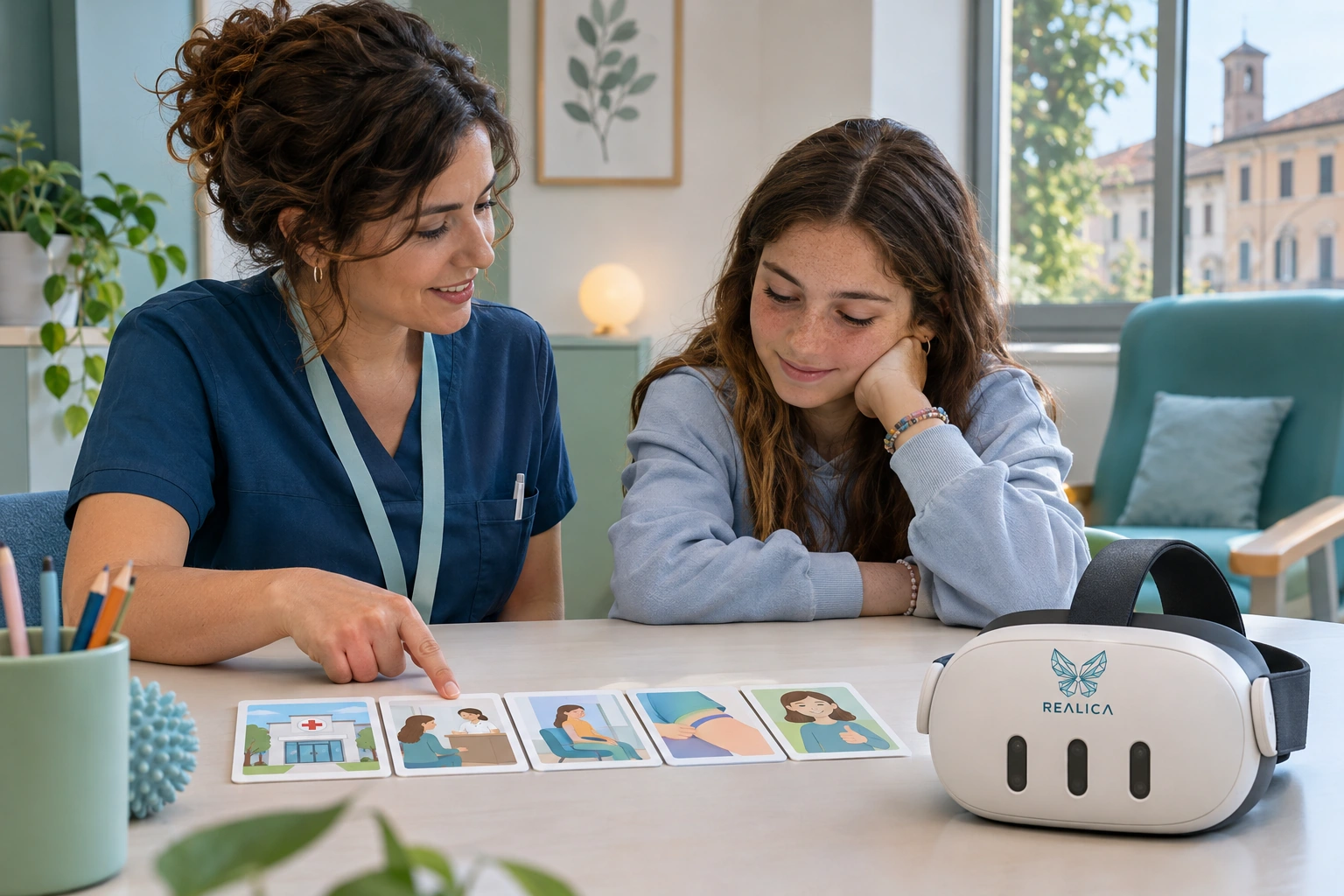
The OASI VR project develops guided experiences to familiarise people with the steps involved in consultations and procedures. The proposed sequence should correspond, as far as possible, to what the patient will actually encounter: positioning, instruments, contact with the practitioner and the end of the procedure.

Before the appointment
Family and staff can share useful information: previous experiences, sensitivity to touch, preferences and signs of overload. A brief visual or narrative preview introduces the procedure in concrete language. Virtual reality can form part of this preparation when the person understands and accepts it.
The aim is not to achieve indiscriminate tolerance, but to build predictability and opportunities for participation. For needle procedures, sensations should be explained honestly and appropriately, without promising that nothing will be felt.
During the procedure
When compatible with the healthcare procedure, familiar content can offer distraction. The practitioner maintains adequate communication, observes signs of discomfort and agrees how to respond to a request for a break. The timing of the actual procedure may require specific management, which should be explained before starting.
Analgesia, local anaesthesia and other clinical measures follow the team's instructions. The immersive experience must not obstruct pain assessment or the ability to report a problem.
Continuity between appointments
For repeated procedures, feedback from the person and family enables preparation to be revised. Understanding of the sequence, acceptance, intensity of discomfort and need for support are observed. The study by Davit and colleagues provides a reference for individualised preparation for blood sampling in autism, using non-VR tools. [5]
Explore Missione Cerotto Stellare
In the same area