
Integration into the care pathway
Defining purposes and responsibilities
Explore the pathwayDefining purposes and responsibilities
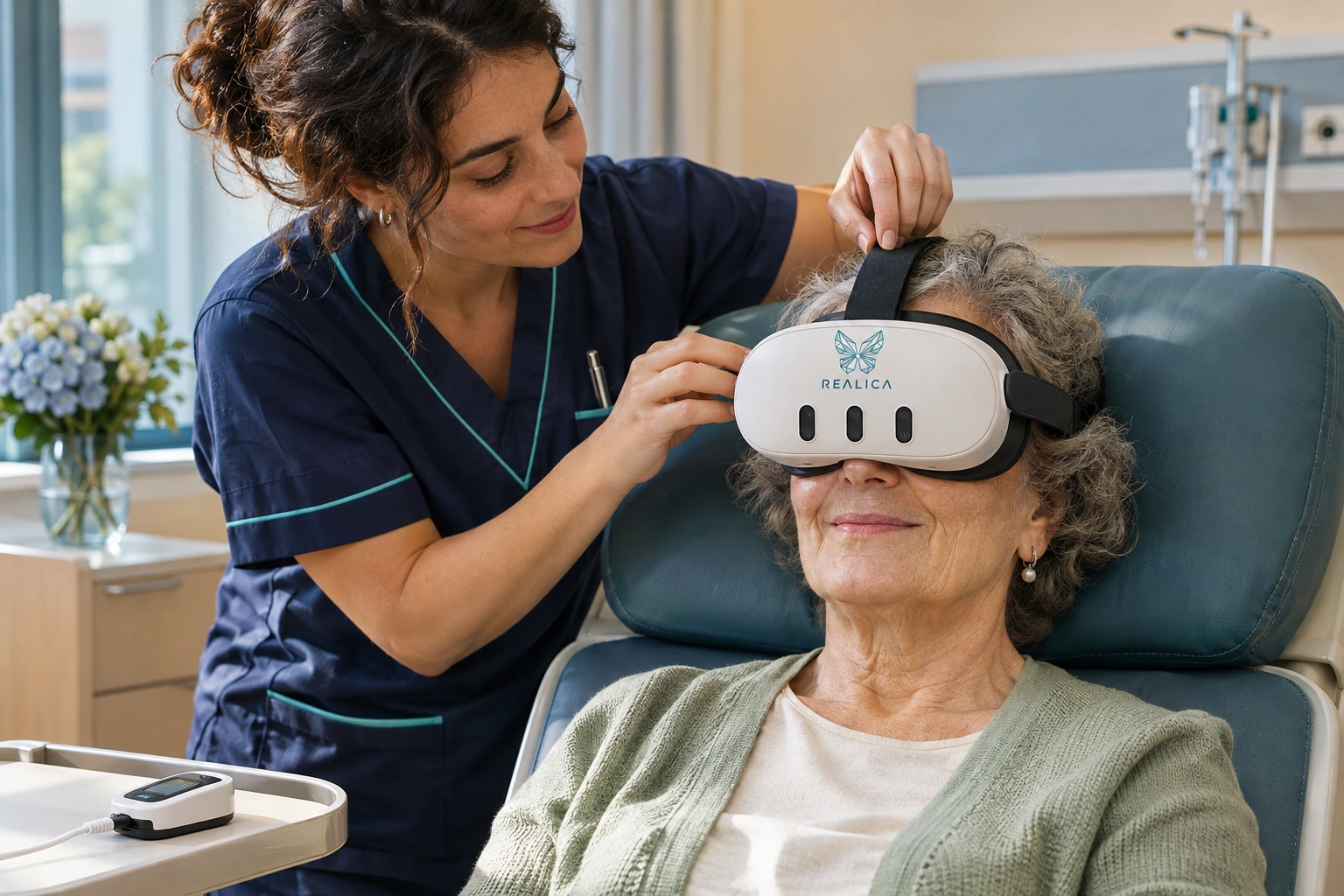
Introducing REALICA into an oncology service or care facility begins with defining the goal: encouraging a moment of relaxation, supporting comfort during therapy or accompanying a procedure. An explicit goal helps determine intended users, timing and assessment methods.
The department identifies the professionals responsible for offering and supervising the experience. Training covers device preparation, communication with the person, management of the experience and criteria for stopping. Hygiene procedures follow the system's instructions and the facility's protocols.

Preliminary assessment
Before each session, the practitioner checks interest, understanding, clinical condition and expected tolerability. Positioning, access to the patient, monitoring requirements and the ability to communicate are relevant. Contraindications and precautions are assessed against the applicable instructions for use.
The experience must be explained clearly: what will be shown, the approximate duration and how to ask to stop. The person may prefer different content, a shorter session or no immersive experience.
During the session
The practitioner maintains supervision appropriate to the setting. The patient must be able to report feeling unwell, needing a break or having other needs. Audio and content are managed so that they do not obstruct care or communication.
The onset of nausea, dizziness, fatigue or disorientation requires the session to be stopped and the person's condition checked. The session may also be suspended for organisational or clinical reasons, without giving the interruption a negative meaning for the patient.
After the session
A brief debrief allows feedback on the experience to be collected and helps establish whether it may be useful in future. The department can document content, duration, tolerability and feedback, together with any symptoms observed before and after.
Continuity and personalisation
Repetition is based on perceived benefit and clinical assessment. The device is integrated into the team's work, psychological support when indicated and the relationship with the family. It does not automatically introduce a different treatment plan.
Arrange a presentation for your team
In the same area