
Dentistry and paediatric dentistry
Comfort as part of the care relationship
Explore the pathwayComfort as part of the care relationship
Dental anxiety can interfere with access to care, remaining in the dental chair and cooperation during treatment. The noise of instruments, positioning and previous experiences can contribute to discomfort. Clear communication and scheduling that respects the patient's pace remain central to their care.
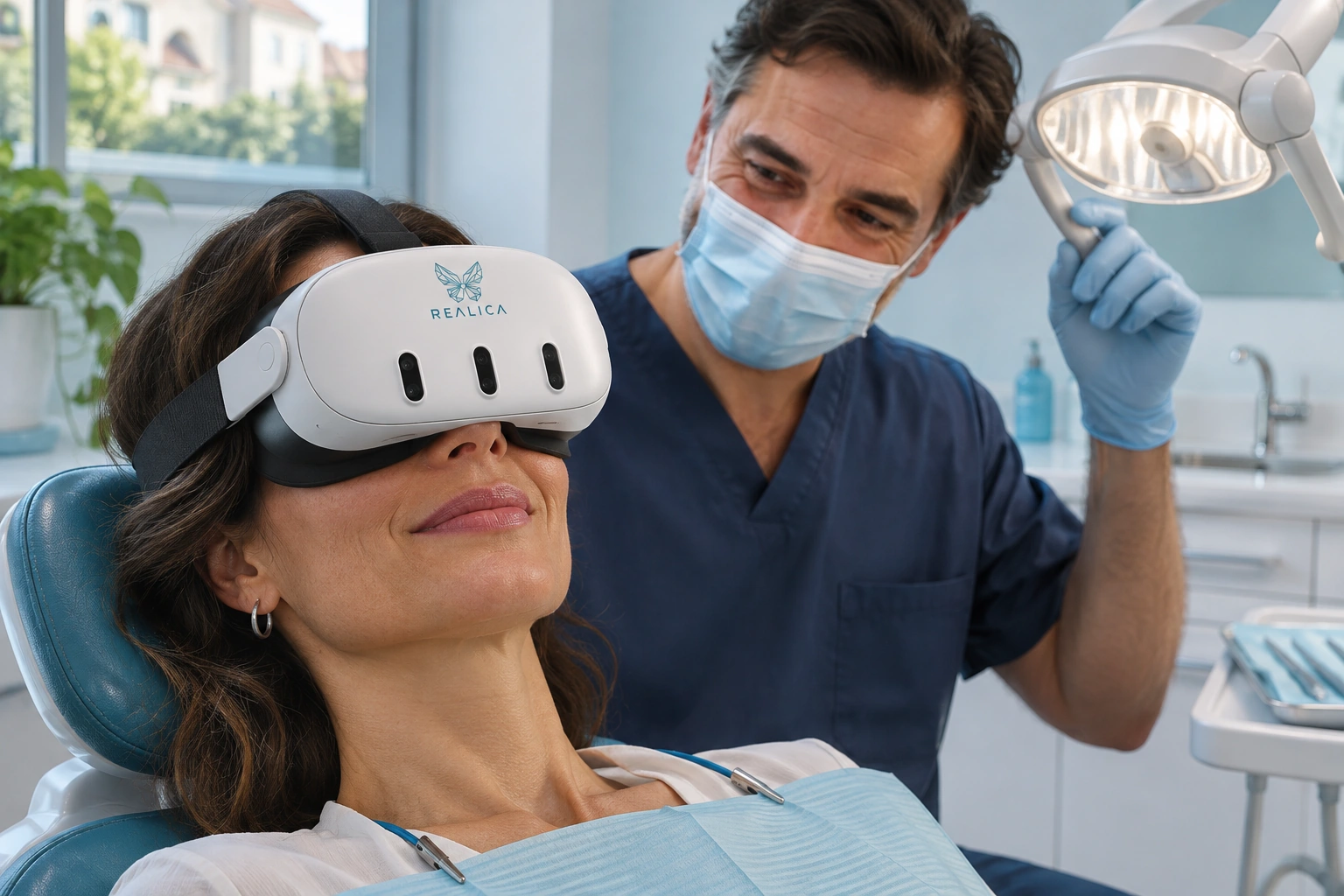
REALICA complements these measures through an immersive experience that directs attention towards relaxing content. Its use forms part of the dentist's plan and does not replace local anaesthesia or other clinically necessary interventions.

Assessing the person and the appointment
Before treatment, the professional checks the patient's willingness to wear the headset, their ability to understand its purpose and their tolerance of the position. The device must allow access to the oral cavity and must not interfere with the team's work. A signal for requesting a break must be agreed, and adequate communication maintained throughout the immersive experience.
For paediatric patients, becoming familiar with the headset may take time. The approach should be adapted to age and individual characteristics, in accordance with the system's indications for use. Involving the caregiver helps identify preferences, fears and strategies that already work well.
A specific clinical finding on REALICA
A prospective observational study of 56 young people aged 11–15 with mild intellectual disability and moderate dental anxiety compared REALICA VR with cartoons on a monitor. Restorative treatment under local anaesthesia was completed in 78.6% of the VR group and 46.4% of the monitor group. Allocation was not randomised: the finding is preliminary and relates to the population and protocol studied. [3]
Documenting the experience
To assess introduction into a dental practice, it is useful to observe acceptance, reported anxiety, comfort, interruptions and treatment completion. The individual patient's experience guides the approach at subsequent appointments; positive feedback does not guarantee a result for other patients.
Request information for your practice
In the same area