
Medical and surgical procedures
Supporting the patient during a procedure
Explore the pathwaySupporting the patient during a procedure
In treatments performed while the patient is awake, anxiety management contributes to the quality of the care experience. Sounds, conversations, waiting and awareness of the surroundings can keep attention focused on the procedure, even when analgesia is adequate.
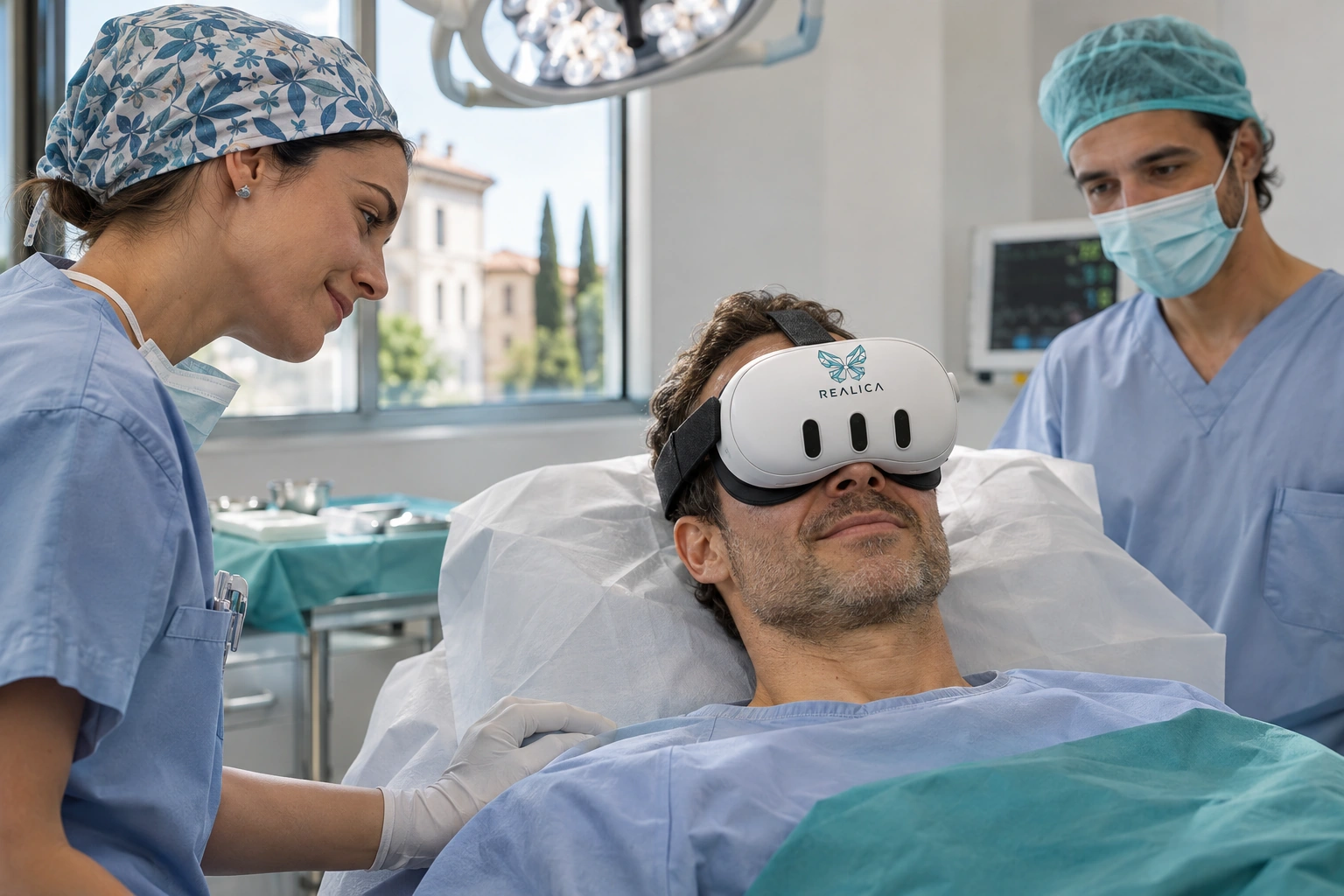
REALICA may be considered as a distraction and relaxation aid when clinical and operational conditions allow use of the headset. The team assesses its integration into the pathway, determines when to begin the experience and retains control of care and monitoring.

Settings to assess
Applications under consideration include outpatient and day surgery under local or regional anaesthesia, endovascular and cardiac catheterisation procedures, vascular access and selected outpatient treatments in urology, andrology and gynaecology. Suturing and wound dressings may also be considered when the patient is clinically stable and the procedure permits.
In obstetrics, any immersive experience should be included in the care plan agreed with the team, as support for comfort. It does not replace pain assessment or available analgesic options. The list of areas describes possible settings for use, rather than demonstrating equivalent efficacy in each of them.
Selection and compatibility with the procedure
The assessment considers cooperation, ability to communicate, planned position, treatment duration, access to the head and face, the sterile field and monitoring devices. Staff must be able to remove the headset quickly when necessary. If the procedure requires continuous verbal or visual interaction, its use should be adapted or ruled out.
Continuity of care
The availability of the headset does not change the procedure's safety criteria. Anaesthesia, analgesia, any pharmacological sedation and the management of complications follow the clinical plan. Research on paediatric PICC placement provides feasibility evidence in a selected setting. [2]
Talk to the REALICA team
In the same area